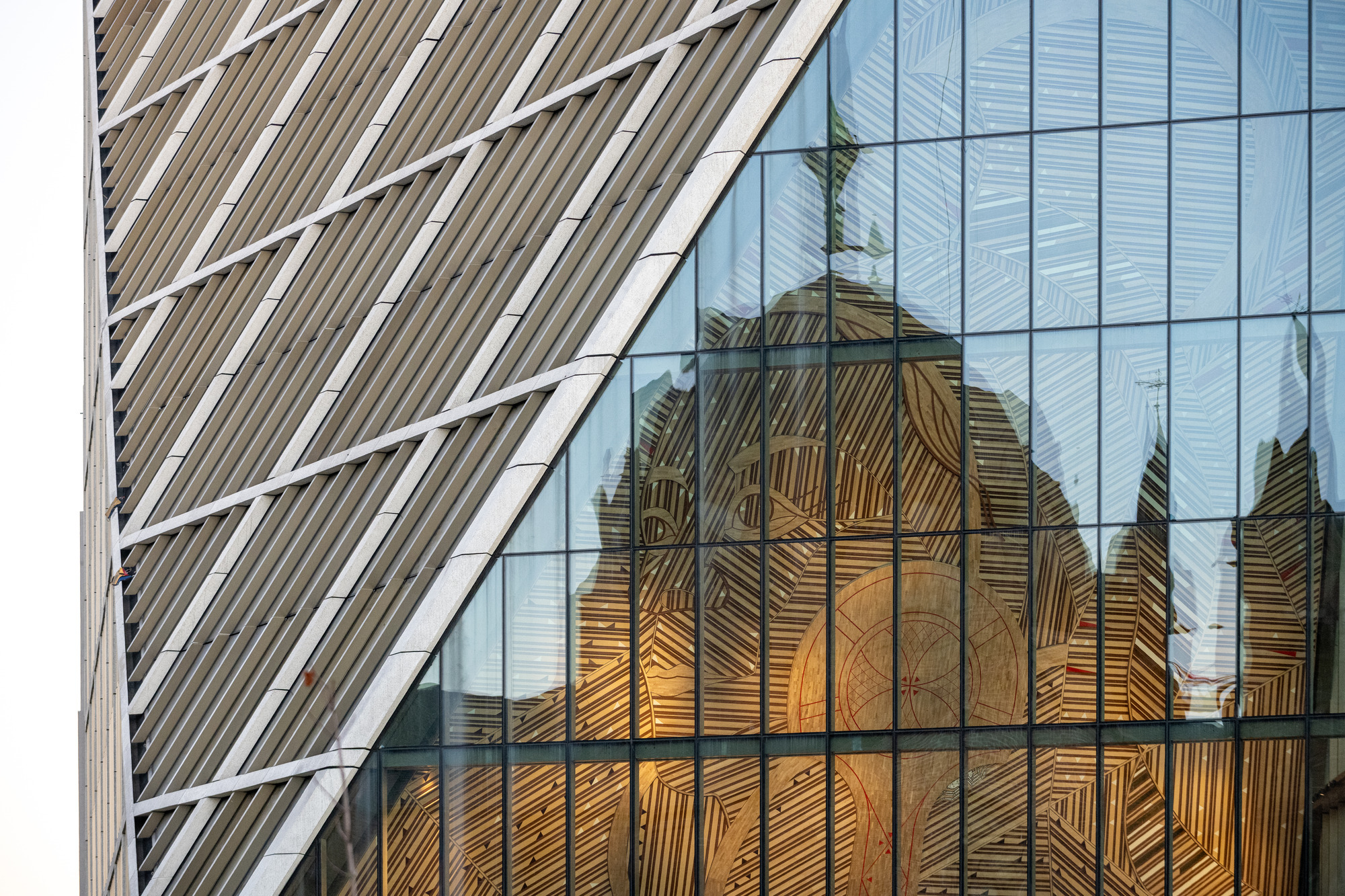
AAhkA brings Sámi culture into the heart of Norwegian democracy
In the newly rebuilt Government Quarter in Oslo, visitors are welcomed by the striking Pyramid Hall – a space that symbolises openness, dialogue, and cultural inclusion. Here, Outi Pieski’s monumental artwork AAhkA transforms a vast timber-clad surface into a vibrant expression of Sámi heritage and matriarchal wisdom.
The Pyramid Hall has a very special role in the new Government Quarter – it is, in many ways, the new face of our democracy. This is where Norway welcomes international guests, where the government meets the press, and where it engages with the public.
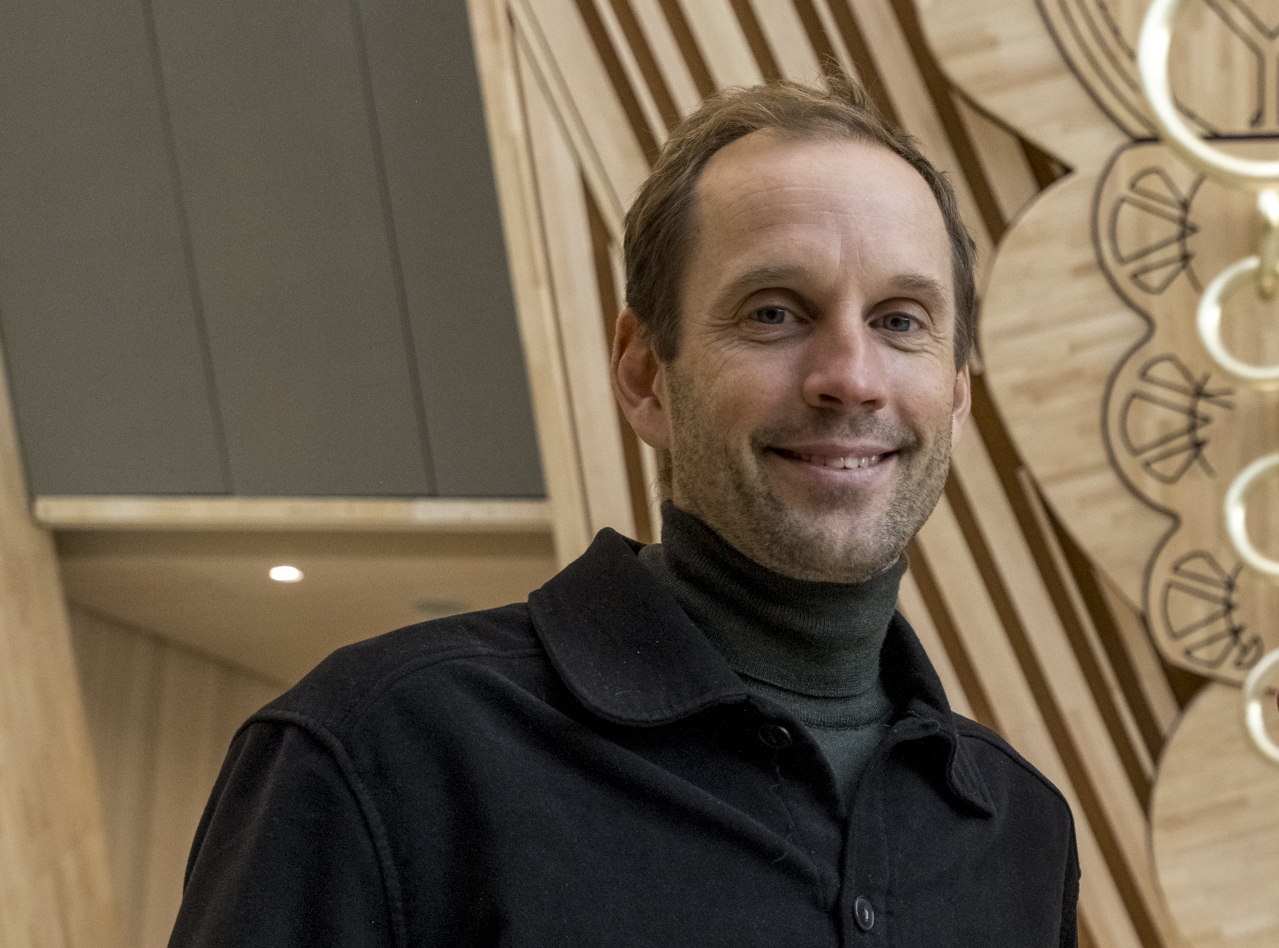
Architect Fredrik Haukland, project leader for the building, explains: “We wanted the entrance to celebrate democracy. The Pyramid Hall is open and transparent, a flexible space, almost like a public square, where people can meet and interact. Outi's work adds an important message about the weight of history and the possibility of change to the ministries managing Norway’s resources.”
A new chapter for the Government Quarter
Following the terrorist attack on 22. July 2011, the Government Quarter has undergone a profound transformation. The new design priorities security, but at the same time also transparency and cultural depth.
“This is not just a workplace – it’s a symbol of our democracy. We wanted the architecture to reflect that, and the Pyramid Hall and AAhkA play a vital role in making the space feel inclusive and alive", Fredrik continues.
Geometry that shapes identity
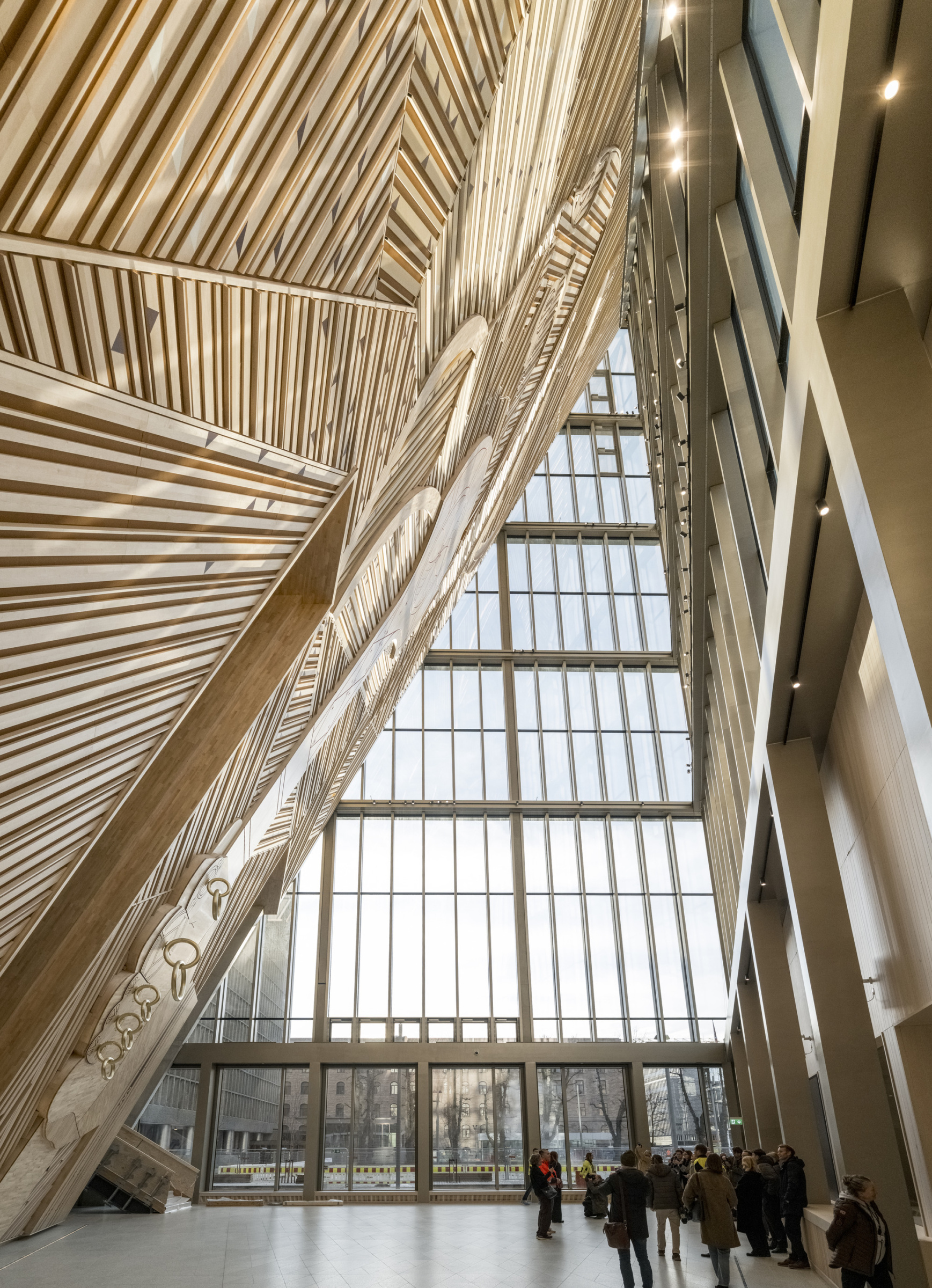
The Pyramid Hall is not only a cultural statement but also a striking example of geometric craftsmanship.
“The hall is a tetrahedron – an elementary geometry with four planes: the floor in Norwegian natural stone, two large glass façades, and a fourth surface in timber,” Fredrik explains. “It gives the room a pure form and a clear identity. I’m especially pleased that we achieved an immaculate triangular surface and that everything in the room is built up from triangles. It’s geometrically satisfying,” he adds with a smile, clearly enjoying the elegance of the design.
A vision of integration and respect
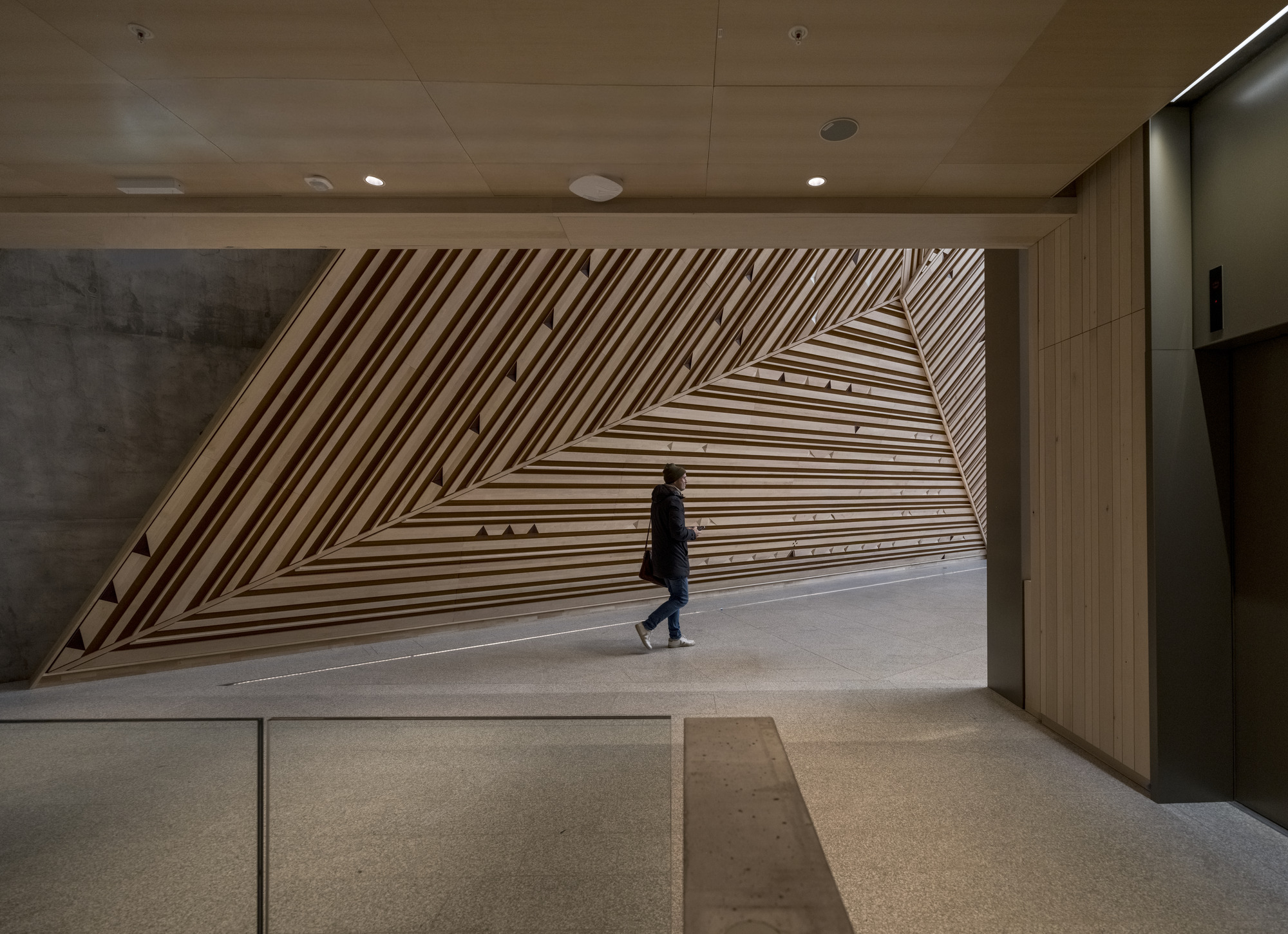
The concept behind AAhkA is deeply spiritual. Its name refers to the Sámi word for “grandmother”, evoking care, continuity, and connection to nature. The artwork spans 700 square metres of Nordic birch, arranged in a triangulated pattern designed by the architects.
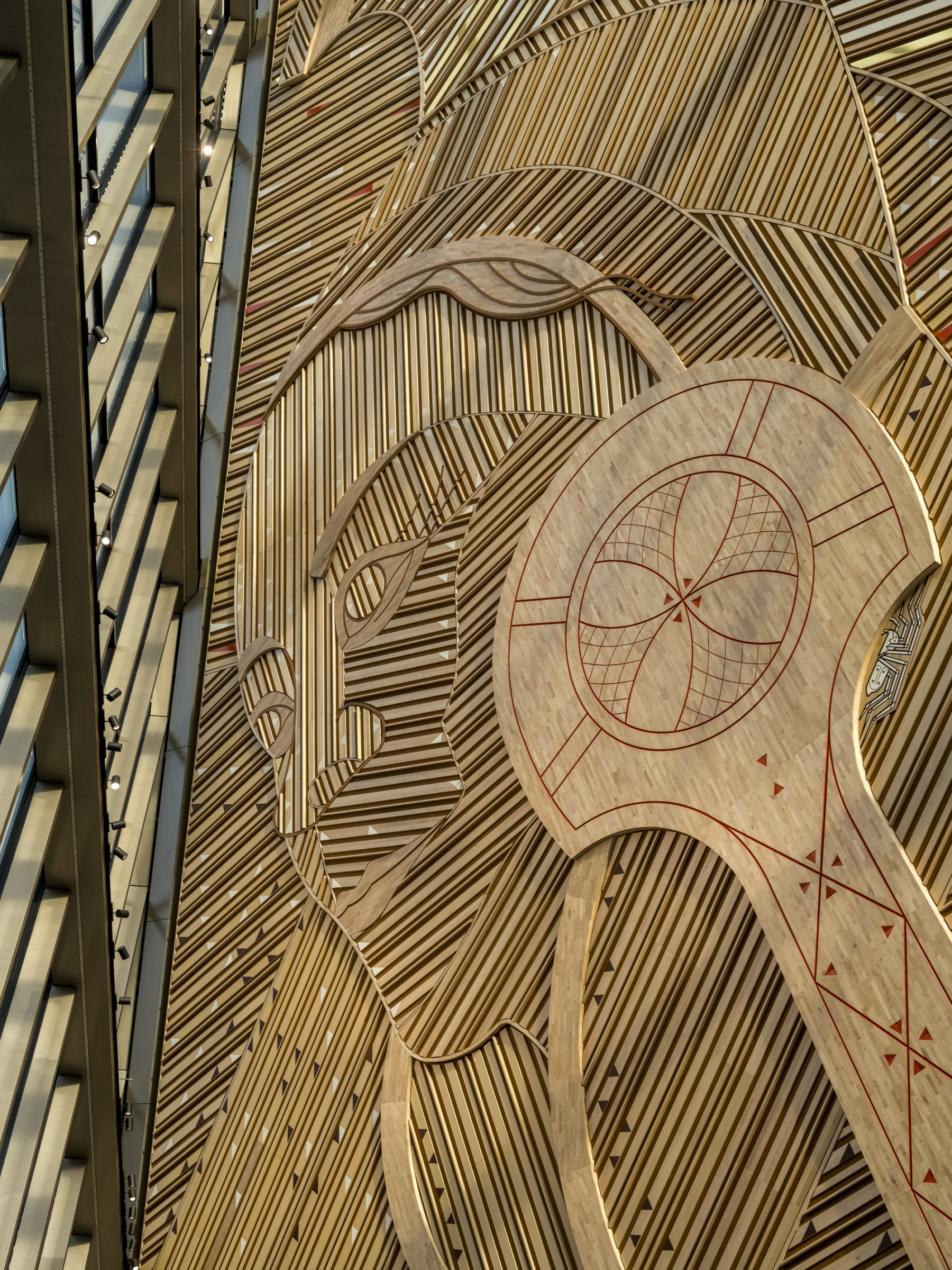
“Architecture should listen,” Fredrik says. “With AAhkA, we’ve created a space that listens to history, to nature, and to people. It’s not just decoration – it’s dialogue.”
“With architecture and art working together, the two disciplines can achieve far more,” Fredrik says. “This is not new. Historically, it has deep roots and is an important part of the Government Headquarters tradition.”
The artist’s perspective
Outi Pieski describes AAhkA as an Indigenous monument in a state building – a bold presence in a space where decisions shaping Norway’s future are made.
“AAhkA is conceived not only as a reaction to the histories of colonisation and assimilation in the Nordic region, or the general male-dominated history of public images in powerful places, but it is also rooted in its own logic – a Sámi logic that stretches much further back in time,” she explains.
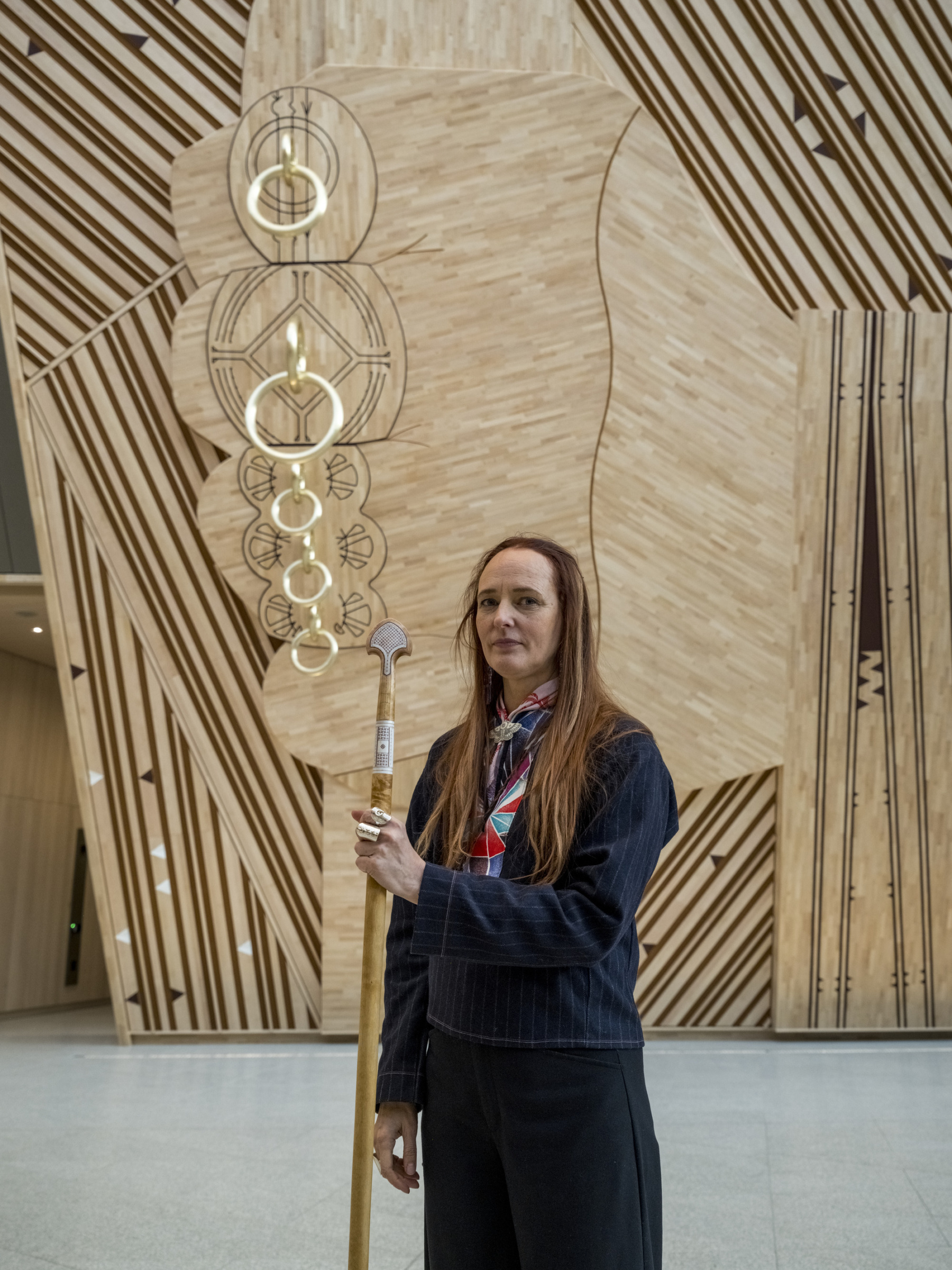
The artwork embodies ancestral knowledge and dreams of non-patriarchal futures. It portrays Mother Earth as a legal person, referencing the sacred mountains in Sápmi known as Aahka or Áhkká, which mean grandmother or guardian.
A space for openness and reflection
The Pyramid Hall is visible from Johan Nygaardsvolds Square, and at night, the artwork glows through the glass façade – a beacon of transparency. This openness is a deliberate response to the call for “more democracy, more openness” after 22 July.
“The dream was to integrate art that gives meaning to the space,” Fredrik says. “AAhkA has done that – and more than we could have imagined.”